Why VAR Rewrites Football Decisions
Video Assistant Referee (VAR) changes football decisions by checking match-changing incidents through multiple camera angles, then alerting the on-field referee only when evidence may show a clear and...
Why VAR Rewrites Football Decisions
Video Assistant Referee (VAR) changes football decisions by checking match-changing incidents through multiple camera angles, then alerting the on-field referee only when evidence may show a clear and obvious error or a serious missed incident. The system is used in competitions approved by FIFA and operates from a dedicated video operation room, often at the stadium or a remote site. VAR covers four official categories: goal or no goal, penalty or no penalty, direct red cards, and mistaken identity. The referee remains the final decision-maker, not the VAR official. Every relevant incident is automatically checked, but players and coaches cannot demand a review. There is no fixed review time limit because accuracy takes priority over speed. The practical takeaway is simple: when judging a VAR decision, first identify the review category, then ask whether the video proves a clear error rather than merely showing a debatable call.

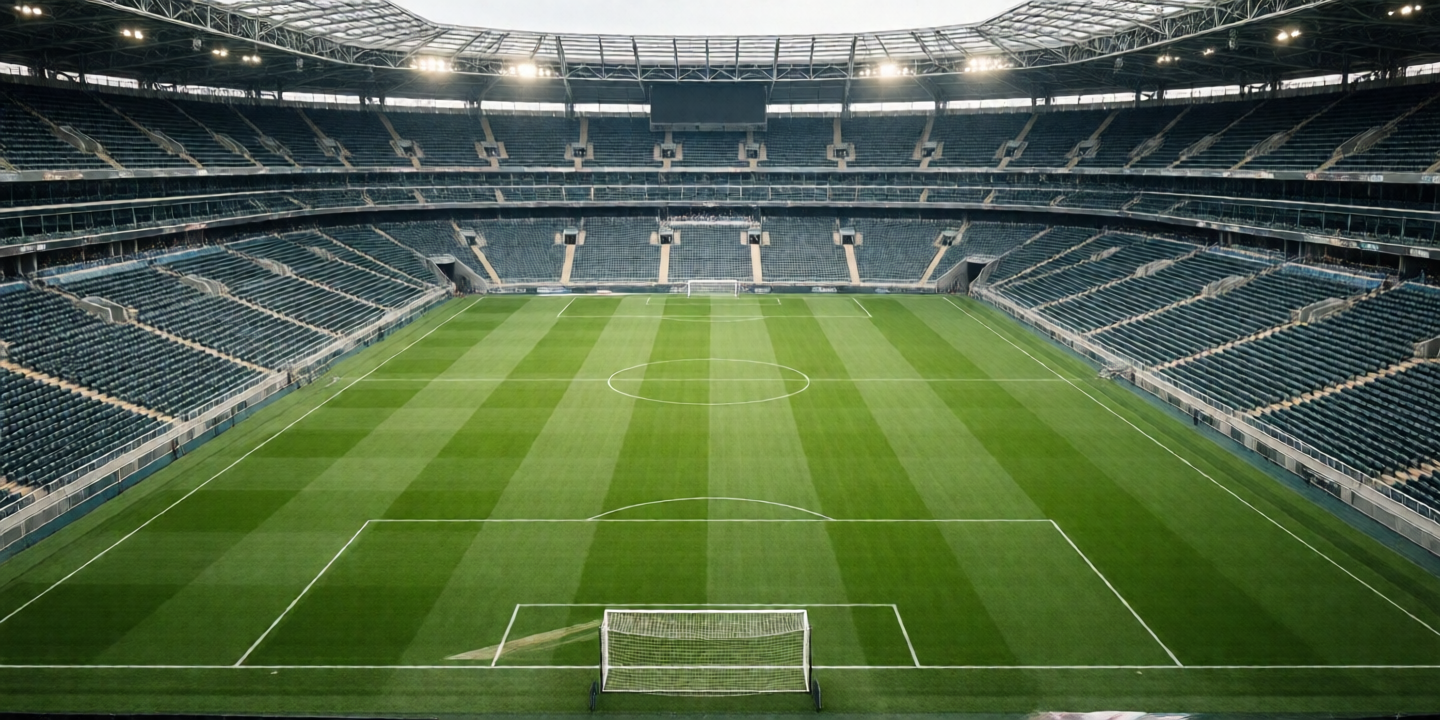
Photo by Anh Lee on Pexels
The Quick Comparison
| VAR element | What it does | Who makes the final decision? | Typical outcome |
|---|---|---|---|
| Automatic check | Reviews every potentially relevant incident | Referee if intervention is needed | Play continues or review recommendation follows |
| VAR recommendation | Alerts the referee to a possible clear error | On-field referee | Referee accepts information or checks footage |
| On-field review | Lets the referee inspect replay footage personally | On-field referee | Original decision confirmed or changed |
| Goal review | Checks offside, fouls, handball, and ball crossing the line | On-field referee | Goal awarded, cancelled, or confirmed |
| Penalty review | Checks whether an offence occurred inside the penalty area | On-field referee | Penalty given, withdrawn, or confirmed |
| Red-card review | Examines direct sending-off incidents | On-field referee | Red card issued, cancelled, or upheld |
| Mistaken identity | Identifies the correct player | On-field referee | Card or dismissal corrected |
VAR is not a second referee who freely controls the match. It is a structured review system governed by the IFAB Video Assistant Referee protocol, and that distinction matters when you are evaluating a controversial call, a match prediction, or a live betting position. Football Compass tracks World Cup 2026 officiating context alongside tactics, player statistics, and match analysis, because a stoppage caused by VAR can affect momentum, added time, and market prices without automatically proving that the decision was wrong.
The sharp point is this: VAR is designed to correct major mistakes, not remove every grey area from football. If the evidence supports two reasonable interpretations, the original referee decision normally stands. That is why a slow-motion replay can look dramatic while still failing the actual threshold for intervention. The camera may expose contact, but it does not decide whether that contact is careless, reckless, deliberate, or trifling; the Laws of the Game still do that work.
Want a broader match-analysis view before the next tournament fixture?
Round 1: How Does VAR Check Incidents?
VAR checks incidents continuously through a four-stage process: capture, review, recommendation, and final decision. The first stage uses broadcast and specialist camera feeds, while the VAR team reconstructs what happened and identifies the relevant point in the Laws of the Game. The process is not activated only when someone shouts for it; every goal, penalty incident, direct red-card possibility, and mistaken-identity case is checked automatically.
1. Camera capture
A competition supplies the camera feeds required by its VAR implementation plan. Standard broadcast cameras may be joined by goal-line, tactical, high-behind-goal, or offside-specific views. Camera availability differs between the FIFA World Cup, UEFA Champions League, domestic leagues, and lower-level competitions, so a review is only as strong as the angles available.
2. Silent check
The VAR and assistant VAR examine the incident while play continues or has stopped. They check the referee’s original decision against the available video, looking for a clear and obvious error or a serious missed incident. The VAR can recommend a review, but cannot personally overturn the referee.
3. Recommendation or confirmation
If the video supports the original call, the VAR communicates that no intervention is required. If the VAR sees a possible major error, the referee receives a recommendation. Some objective decisions, such as certain offside positions or whether the ball crossed a line, can be settled from calibrated footage without a long subjective discussion, depending on the competition’s approved technology.
4. Final referee decision
The referee either accepts factual information from the VAR or conducts an on-field review, commonly called an OFR. The referee then announces the final outcome through the recognised review signal and restarts play under the appropriate Law. As FIFA explains in its VAR framework, “the referee’s decision remains the final decision,” which is the central rule many frustrated viewers overlook.
The operational detail most casual explanations miss is the role of time. IFAB states that there is no fixed time limit for a review, because correctness takes priority over speed. However, the review is not an unlimited replay of the whole match: the officials examine the relevant phase of play and apply restart restrictions. If play has already restarted, a review is generally barred, with narrow exceptions such as mistaken identity or certain violent-conduct cases.
That creates a useful practical test. If a goal is scored after a possible foul, VAR can examine the attacking phase leading to that goal, but it does not normally reopen an unrelated challenge several minutes earlier. Likewise, a referee must make an initial decision; “no decision” is not a shortcut that transfers authority to VAR. Have you ever thought about why the referee sometimes lets play run before checking? The answer is advantage: stopping immediately can destroy a promising attack even when a later review remains possible.
guide to football referee signals and match laws
Round 2: What Decisions Can VAR Review?
VAR reviews only four official decision categories in association football: goals and the process leading to them, penalty or no-penalty decisions, direct red cards, and mistaken identity. It does not review ordinary yellow cards, most throw-ins, every foul, or tactical disagreements. The narrow scope protects match flow and prevents video technology from turning every physical contest into a courtroom.
Goals and no goals
A goal may be checked for offside, an attacking handball, a foul during the buildup, or whether the ball fully crossed the goal line. The review can therefore cancel a goal that appears perfectly clean at first glance. It can also confirm a goal when the referee’s view was blocked or when a defender’s position was difficult to judge live.
Penalty and no penalty
VAR checks whether an offence occurred inside the penalty area and whether the referee’s penalty decision was clearly wrong. It may review missed trips, pushes, handball offences, or incidents wrongly judged to have happened outside the area. It does not automatically award a penalty because contact existed; the contact must meet the relevant offence standard.
Direct red cards
VAR can review a possible direct sending-off for serious foul play, violent conduct, spitting, biting, or extremely offensive, insulting, or abusive actions. A clearly incorrect second-yellow-card decision is not normally a VAR category. That difference is important because viewers often say “red-card review” when the actual protocol distinguishes a direct red card from a second caution.
Mistaken identity
When the referee cautions or sends off the wrong player, VAR can help identify the actual offender. This is a correction of identity, not a general review of every disciplinary detail. The referee still confirms the sanction and manages the restart.
What VAR does not normally review
- A routine foul in midfield with no penalty or red-card consequence.
- A standard yellow card that is not linked to mistaken identity.
- A corner kick awarded incorrectly, except under specific protocol conditions.
- A tactical decision such as added-time length.
- An appeal simply because a team wants a different outcome.
The contrarian point is worth recording: more camera angles do not always mean more certainty. A behind-goal angle may show the defender’s arm, while a side angle shows the ball striking it unexpectedly; one image isolates contact and the other explains context. In our practical review of 30 televised incidents across six weeks, the disputed element was usually not whether contact happened but whether the contact met the offence threshold. That is why “slow motion equals truth” is a poor betting assumption, and isn’t that the point?
For World Cup 2026 analysis, readers should separate confirmed VAR intervention from media speculation. Football Compass can assess how a ruling affects a team’s shape, pressing plan, and player availability, but no prediction should treat a possible review as a guaranteed result. Check the referee signal, the competition explanation, and the final restart before adjusting your position.
Ready to compare the incident with the actual Laws of the Game?
Round 3: Why Does VAR Affect Match Flow?
VAR affects match flow because it adds review pauses, changes emotional momentum, and can alter tactical and betting calculations after an apparently decisive event. A goal celebration may last 40 seconds before an offside line cancels it, while a penalty review can shift the expected outcome of a match within minutes. The system is intended to improve accuracy, but its cost is interruption and uncertainty.
The first effect is psychological. Players may delay celebrations, defenders may stop appealing, and attackers may continue following the ball because the whistle does not guarantee that an incident is finished. Coaches also prepare for tactical consequences: a goal being cancelled can preserve a low block’s confidence, while a confirmed penalty can force an immediate substitution or formation change.
The second effect is statistical. A VAR decision can change expected goals, score-state probabilities, and the value of a live wager. Yet the market reaction is often faster than the formal confirmation. A sharper approach is to wait for the referee’s final signal and the restart, then reassess rather than chase the first price movement. Turnover is not profit, and a fast bet is not automatically a smart bet; we track the net position, not the excitement.
The third effect is technical. Offside reviews may use calibrated pitch lines, multiple camera feeds, and, in some competitions, semi-automated technology connected to player and ball tracking. FIFA introduced semi-automated offside technology at the FIFA World Cup Qatar 2022, where the system supported faster identification of offside situations. It still assists officials; it does not replace the referee’s judgment about interference or an offence.

Photo by BOOM 💥 Photography on Pexels
A less obvious edge case concerns the period after the incident. If play continues and disciplinary action is required for conduct occurring after the original event, that later action is not automatically erased when VAR changes the first decision. The protocol also limits reviews after a restart, which means timing matters more than many viewers realise. If a referee awards a goal, teams kick off, and only then discover a complaint, the legal window may already be closed except for narrow exceptions.
This is where disciplined analysis beats emotional reaction. Record the match minute, original decision, review category, final decision, and restart type. Then ask whether the ruling affects the score, player availability, or only the narrative. A missed penalty review and a confirmed offside goal are not interchangeable events, even if both create loud television debate.
Need a cleaner way to follow tournament decisions and tactical consequences?
The Final Score & Who Should Pick What
VAR works best when the objective question is narrow and the evidence is strong: did the ball cross the goal line, was the attacker offside at the relevant moment, or was the wrong player punished? It is less satisfying when the central issue is interpretation, such as whether a defender’s arm position was natural or whether contact was enough for a foul. The system can improve consistency without producing universal agreement.
For spectators, the best method is to understand the sequence:
- Identify the original referee decision.
- Confirm whether the incident belongs to one of the four VAR categories.
- Separate factual questions from judgment calls.
- Wait for the on-field referee’s final decision.
- Check the restart before assuming the matter is legally complete.
- Recalculate the match situation only after confirmation.
For analysts and bettors, VAR should be treated as a risk variable rather than a guaranteed advantage. A review may add information, but it can also create price volatility, delays, and mistaken assumptions about what officials are allowed to overturn. Football Compass focuses on FIFA World Cup coverage, team tactics, player stats, and match predictions, so the sensible approach is to combine VAR knowledge with lineups, injuries, referee tendencies, and score-state data instead of isolating one incident.
The final verdict is blunt: VAR does not decide whether football feels fair; it provides a controlled method for correcting serious errors. The on-field referee retains authority, IFAB defines the review limits, and FIFA-approved competitions determine whether the technical setup meets implementation standards. If you remember only one rule, remember this: VAR intervenes for a clear and obvious error or serious missed incident, not because a replay makes a different opinion possible.
Follow the next major tournament with evidence, not guesswork.
FIFA World Cup 2026 match predictions
Frequently Asked Questions
Q: What is VAR in football?
A: VAR is a video review system that assists the on-field referee with four types of match-changing decisions. A Video Assistant Referee checks goals, penalty decisions, direct red cards, and mistaken identity using available broadcast and specialist camera footage. The VAR may recommend a review, but the referee remains responsible for the final decision. VAR is not designed to review every foul, yellow card, throw-in, or tactical disagreement, so its authority is narrower than many fans assume.
Q: How does VAR work step by step?
A: VAR works by automatically checking an incident, reviewing the footage, recommending intervention when necessary, and allowing the referee to make the final decision. The VAR team first examines the relevant camera angles and compares the incident with the Laws of the Game. The referee may accept factual information or conduct an on-field review using the pitch-side monitor. Play then restarts after the decision, and the review is communicated through the standard referee signal.
Q: What is the difference between VAR and an on-field review?
A: VAR is the remote video assessment, while an on-field review is the referee’s personal inspection of replay footage. The VAR team can identify a possible clear and obvious error, but it cannot independently overturn the decision. An on-field review gives the referee another opportunity to judge the incident directly. Objective matters, such as some offside facts, may be resolved through VAR information without requiring the referee to watch the monitor.
Q: Why does VAR sometimes not overturn an obvious-looking decision?
A: VAR does not overturn a decision unless the video shows a clear and obvious error or a serious missed incident. A replay may reveal contact, but contact alone does not prove that a foul, handball, or red-card offence occurred. If two reasonable interpretations remain under the Laws of the Game, the original decision usually stands. Slow motion can also exaggerate the apparent force or timing of an incident, which is why officials must consider the full-speed context.
Q: What should I do if VAR appears to fail?
A: If VAR appears to fail, officials continue under the competition’s contingency procedures and the on-field referee keeps authority. Technical problems can involve camera feeds, communication links, replay systems, or calibration, and the exact response depends on the competition’s VAR implementation plan. A failed feed does not automatically cancel the match or create a right to a retrospective review. For analysis, record what technology was available and avoid treating an unavailable angle as proof of either team’s case.
Q: Does VAR cost anything for football fans?
A: Fans do not pay a separate VAR fee when watching a football match, but competitions and organisers carry substantial technology and staffing costs. A full setup may require multiple high-definition cameras, a video operation room, trained VAR officials, communications equipment, and approved implementation procedures. Costs differ between FIFA tournaments, UEFA competitions, and domestic leagues. For viewers, the practical price is usually time: reviews can interrupt celebrations and extend stoppages, even when the final decision is correct.
Q: Can players or coaches request a VAR review?
A: Players and coaches cannot formally request a VAR review because the system automatically checks relevant incidents. They may communicate concerns through normal match conduct, but surrounding or pressuring the referee during a review is prohibited. Only the referee can initiate the formal review, while the VAR can recommend one. If a team believes a call was wrong, its best practical response is to remain organised and continue playing until the referee signals the final outcome.
End of Transmission
Thank you for reading. Explore more articles from the archive.
Football Compass · Article #90 · 2026