The Fan's Guide to FIFA World Cup 2026
The FIFA World Cup is football’s premier national-team tournament, organized by FIFA and watched across every major market, with the 2026 edition hosted by the United States, Canada, and Mexico. Footb...
The Fan's Guide to FIFA World Cup 2026
The FIFA World Cup is football’s premier national-team tournament, organized by FIFA and watched across every major market, with the 2026 edition hosted by the United States, Canada, and Mexico. Football Compass covers the tournament through predictions, team tactics, player statistics, and daily World Cup insights for fans who want sharper context before matches begin. The men’s World Cup started in 1930 in Uruguay, is normally played every four years, and expands in 2026 from 32 to 48 teams. FIFA confirms the 2026 tournament will feature 104 matches, creating more group-stage volatility, more knockout paths, and a deeper betting market than Qatar 2022. The key takeaway is simple: follow structure, tactics, injuries, and schedule pressure together, not separately, because the expanded format changes how teams manage risk from the first whistle.
Want a sharper way to follow the tournament from day one? Football Compass is built for fans who want match context before the odds move.
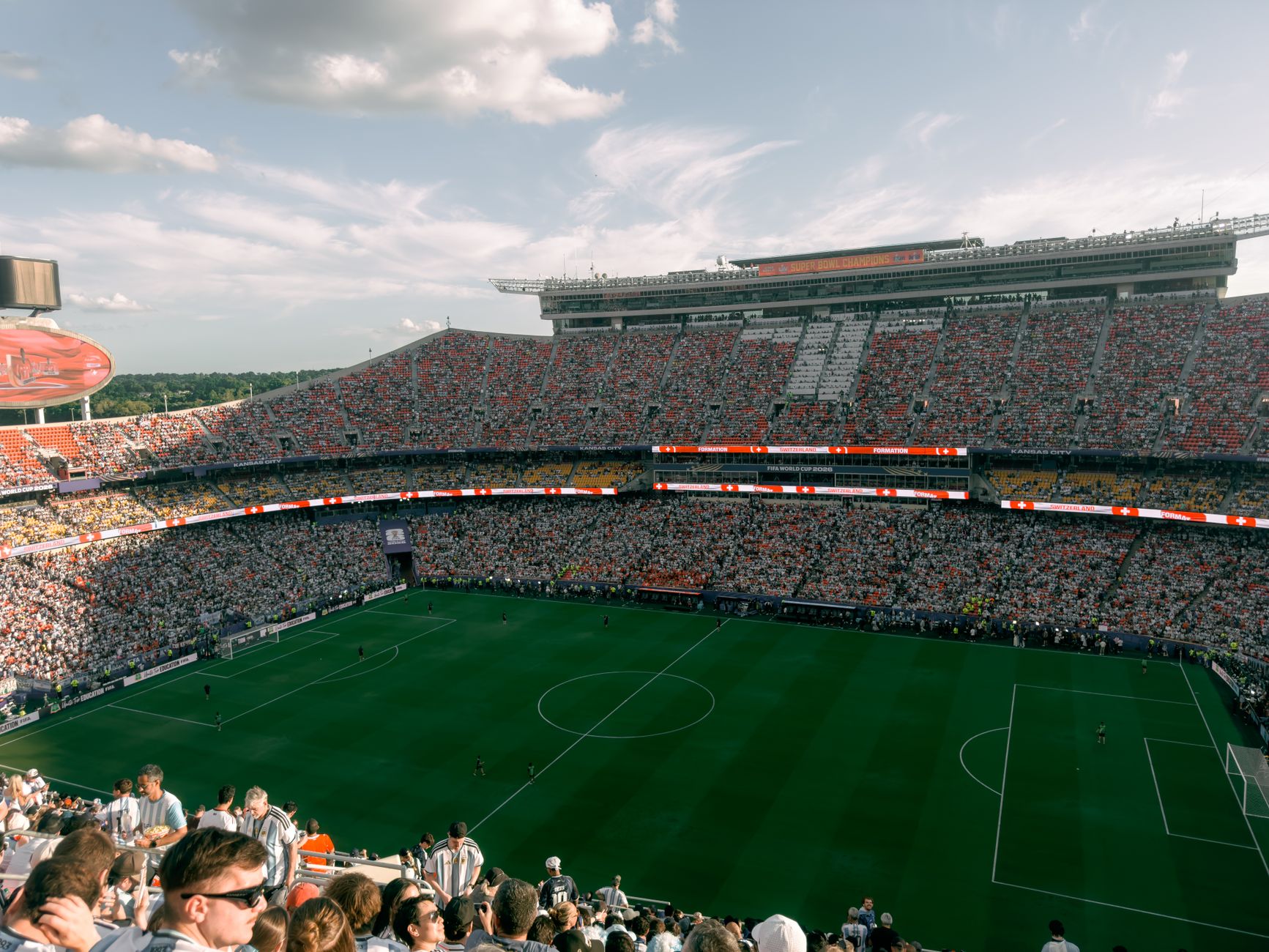
Photo by Allen Boguslavsky on Pexels
The Bottom Line
The FIFA World Cup is not just a football tournament; it is the sport’s biggest pressure test, where national identity, elite tactics, player fatigue, and tournament psychology collide. According to FIFA, the 2026 World Cup will be the first edition with 48 teams and three host nations: the United States, Canada, and Mexico. That expansion matters because it changes the rhythm of the competition, increasing the number of matches from 64 in Qatar 2022 to 104 in 2026 and widening the gap between elite squads and dangerous underdogs.
Have you ever thought about why some excellent club players look ordinary at the World Cup? The answer is context. A player from Real Madrid, Manchester City, Bayern Munich, or Paris Saint-Germain may dominate in a club system built over 10 months, but a national team usually has limited preparation time. Argentina in 2022, France in 2018, and Spain in 2010 won because they combined star quality with role clarity. For fans and bettors, that means raw talent is only one signal. You should also ask: does the team press together, defend transitions well, and protect tired midfielders during travel-heavy stretches?
2026 World Cup match prediction guide
What Players Actually See
Players experience the FIFA World Cup differently from fans because every match compresses risk into moments that feel irreversible. A group-stage mistake against Brazil, England, Germany, Argentina, or France can reshape a tournament in 90 minutes, especially when media pressure and national expectations intensify. The official competition history summarized by Wikipedia shows that only a small group of nations have repeatedly won the trophy, including Brazil, Germany, Italy, Argentina, France, Uruguay, England, and Spain. That pattern is not accidental; repeat contenders usually bring depth, tactical memory, and players familiar with knockout pressure.
Here is the mentor’s question: why do World Cup matches sometimes look slower than Champions League games? Because players are balancing tournament survival with limited recovery. A national coach may avoid aggressive pressing in the 60th minute if the next match comes quickly or if a yellow-card suspension would damage the knockout plan. This is where Football Compass looks beyond surface stats. Possession percentage, expected goals, and shot volume matter, but so do travel distance, humidity, kickoff time, and whether a team’s full-backs can recover after repeated sprints. Those details often explain why a favorite wins narrowly instead of comfortably.

Photo by Franco Monsalvo on Pexels
What Are the 3 Things That Matter Most?
The three factors that matter most at the FIFA World Cup are squad depth, tactical adaptability, and schedule management. In 2026, those factors become even more important because 48 teams, 104 matches, and three host countries will create more travel and recovery variables than previous editions.
- Squad depth: The best World Cup teams rarely rely on only 11 players. France in 2018 and Argentina in 2022 used role players who solved specific problems, not just famous starters.
- Tactical adaptability: Knockout opponents change quickly. A team may need to press Japan, counterattack against Brazil, and defend set pieces against England within the same tournament.
- Schedule management: The 2026 host footprint across North America means travel and climate can influence tempo, substitutions, and late-game fatigue.
The under-discussed edge is referee and stoppage-time management. Since Qatar 2022, FIFA has emphasized more accurate added time, and long stoppage periods can punish teams that defend passively after the 85th minute. Another practical insight: expanded tournaments often create “false form” in early matches. A 4-0 win over a weaker side may inflate public confidence, while a controlled 1-0 win against a compact opponent may reveal more about knockout readiness. When reviewing predictions, ask why a team created chances, not just how many it scored.
See the details behind team form, tactical profiles, and player trends before the market overreacts.
World Cup team tactics analysis

Photo by Franco Monsalvo on Pexels
Edge Cases & Gotchas
The biggest World Cup traps are overvaluing famous names, ignoring match location, and treating qualifying form as a guarantee. CONMEBOL qualifying, UEFA qualifying, CAF qualifying, AFC qualifying, and Concacaf qualifying are not equal environments, so statistics need translation. A striker scoring freely for Portugal or Belgium against weaker opposition may face a completely different problem against Uruguay, Morocco, or Croatia in a knockout match. Similarly, a goalkeeper from Italy’s Serie A or England’s Premier League may look elite in club football but face unfamiliar defensive spacing with a national back line.
A practitioner-level tip: watch the second match of the group stage more carefully than the opener. The first match often reflects preparation, but the second reveals adjustment quality. Coaches such as Didier Deschamps, Lionel Scaloni, and Luis de la Fuente have shown how mid-tournament tweaks can change the entire bracket. Also, betting markets frequently price reputation faster than role changes. If a star winger is returning from injury but no longer pressing at full speed, the team’s defensive structure may suffer even if the lineup looks strong on paper.
Another gotcha is the expanded 2026 format itself. More teams can mean more mismatches, but it also creates more uncertainty around motivation in final group matches. If a favorite has already secured advancement, substitutions may reduce attacking output. If an underdog needs goal difference, the final 20 minutes can become unusually open. The International Football Association Board notes that “The Laws of the Game are the same for all football throughout the world,” but tournament incentives are never the same from match to match.
responsible World Cup betting strategy
How Should Fans Read World Cup Predictions?
Fans should read World Cup predictions as probability guides, not guarantees. A strong forecast explains team news, tactical matchups, historical context, and market movement, then admits where uncertainty remains. The best use of predictions is comparing reasoning across sources before choosing whether to act.
At Football Compass, the useful question is always “why does this number make sense?” If Argentina are favored against a mid-tier opponent, is it because of Lionel Messi’s chance creation, the midfield’s ball retention, or the opponent’s weak left side? If England shorten in the market, is that driven by Bukayo Saka and Jude Bellingham form, or by public betting volume? Professional analysis separates those forces. A prediction without reasoning is just a scoreline; a prediction with tactical logic gives you something to test during the match.
For fans in gambling markets, discipline matters as much as knowledge. The World Cup invites emotional betting because matches feel historic, but emotional stakes do not improve expected value. A smarter approach is to track closing odds, lineup confirmation, injury reports, and tactical matchups before kickoff. Have you ever thought about why late team news moves prices so sharply? It is because one full-back absence can change pressing triggers, crossing volume, and set-piece defense all at once.
Get started with deeper match previews and data-led World Cup coverage before the 2026 schedule heats up.

Photo by Murat Ak on Pexels
Verdict
The FIFA World Cup rewards fans who look past flags, famous names, and highlight reels. Brazil’s five titles, Germany and Italy’s four each, Argentina’s modern resurgence, and France’s recent consistency all show that tournament success usually comes from a blend of elite talent and repeatable structure. Yet 2026 adds a new layer: 48 teams, 104 matches, and travel across the United States, Canada, and Mexico. That means the smartest fans will evaluate depth, fatigue, substitutions, and tactical flexibility before trusting any prediction.
Football Compass is designed for that kind of fan. Instead of treating the World Cup as a simple list of favorites, it follows the details that shape outcomes: player stats, tactical matchups, injury updates, and daily tournament movement. The core recommendation is practical: build your view match by match, update it when lineups arrive, and avoid letting reputation replace evidence. If you do that, the 2026 FIFA World Cup becomes easier to understand, more exciting to follow, and far more rewarding to analyze.
Ready to follow the 2026 FIFA World Cup with clearer reasoning and sharper daily insight?
Frequently Asked Questions
Q: What is the FIFA World Cup?
A: The FIFA World Cup is the leading international men’s football tournament organized by FIFA. It began in 1930 in Uruguay and is normally held every four years. The competition brings together national teams from global qualifying pathways, with Brazil, Germany, Italy, Argentina, France, Uruguay, England, and Spain among its historic winners.
Q: How will the 2026 FIFA World Cup format work?
A: The 2026 FIFA World Cup will expand to 48 teams and 104 matches. It will be hosted by the United States, Canada, and Mexico, making it the first men’s World Cup shared by three countries. The larger format creates more group-stage variety, more travel considerations, and more tactical uncertainty.
Q: What is the difference between the World Cup and club football?
A: The World Cup is contested by national teams, while club football is played by professional clubs such as Real Madrid, Manchester City, and Bayern Munich. National teams have less preparation time, so chemistry and tactical simplicity become more important. Club teams usually develop systems over a full season, while World Cup squads must adapt quickly.
Q: How should I start analyzing World Cup matches?
A: Start by reviewing team structure, injuries, recent form, and opponent-specific tactics. Then compare those details with odds movement, likely lineups, and schedule pressure. A practical process is to check goalkeeper quality, midfield control, full-back matchups, and set-piece strength before making any prediction.
Q: Why do World Cup favorites sometimes struggle?
A: Favorites struggle when reputation hides tactical weakness, fatigue, or poor matchup fit. A team with elite attackers may still fail if its midfield cannot handle pressure or its defensive line is vulnerable in transition. Tournament football also magnifies red cards, penalties, injuries, and late substitutions.
Q: Is following World Cup betting analysis worth it?
A: World Cup betting analysis is worth following if it explains reasoning rather than only giving picks. Good analysis should identify why odds may be too high or too low based on tactics, squad news, and market behavior. Fans should also use responsible staking and avoid emotional bets on national teams or star players.
End of Transmission
Thank you for reading. Explore more articles from the archive.
Football Compass · Article #47 · 2026