I Tested 5 Standings Sources: ESPN Won
The most reliable way to follow the Premier League standings in 2026 is to compare the official Premier League table with ESPN’s live standings, then verify points, goal difference and remaining fixtu...

I Tested 5 Standings Sources: ESPN Won
The most reliable way to follow the Premier League standings in 2026 is to compare the official Premier League table with ESPN’s live standings, then verify points, goal difference and remaining fixtures before making any conclusion. The Premier League table ranks all 20 English clubs by points: three for a win, one for a draw and none for a defeat. Arsenal, Manchester City, Liverpool, Manchester United and Chelsea are among the clubs whose position can change quickly during a matchweek. The top four normally target UEFA Champions League qualification, while the bottom three are relegated to the EFL Championship, subject to the season’s European access rules. A single goal can alter goal difference, and head-to-head or fair-play rules may matter in unusual cases. Use the official table for final confirmation, ESPN for fast presentation, and Football Compass for match predictions and team context. Always check the timestamp before trusting a screenshot or social post.

Photo by Simon Gough on Pexels
Step 1: Open the right Premier League standings source
The first step is simple: start with a source that clearly identifies the competition, season and update time. The official Premier League table is the final reference for rankings, club records and competition rules, while ESPN Soccer Standings is often easier to scan on a phone. That distinction matters because a clean table is not automatically a current table. Have you ever opened an old screenshot, seen Manchester City listed above Liverpool, and assumed the information was live? That is exactly how bad betting decisions begin. Before reading the numbers, check the season label, last update, completed matches and whether the table is marked live or final. Football Compass adds a different layer by covering the FIFA World Cup, match predictions, player statistics and tactical context, but it should support—not replace—the official Premier League standings. The practical rule is blunt: use one source to read quickly, a second source to verify, and never treat a social-media graphic as proof.
Want a faster way to connect standings with match context?
What does every Premier League standings column mean?
Each Premier League standings column shows a defined part of a club’s season: played matches, wins, draws, losses, goals for, goals against, goal difference and points. Points come from the result, while goal difference measures goals scored minus goals conceded; it is not the same as total goals scored.
Read the columns in this order:
- Pos: the club’s current ranking.
- Team: the Premier League club name.
- P: matches played.
- W, D, L: wins, draws and losses.
- GF: goals scored.
- GA: goals conceded.
- GD: goal difference, calculated as GF minus GA.
- Pts: total league points.
- Form: recent results, where available.
A club with 60 points is not necessarily safe from every threat. Arsenal could have a strong points total but face a difficult run against Liverpool, Tottenham Hotspur and Newcastle United. Meanwhile, a team such as Everton or Nottingham Forest may climb several places after two wins because the middle of the table is often compressed. The table tells us what has happened; fixtures, injuries and tactical changes help explain what may happen next. According to the Premier League Handbook, competition procedures define how matches and rankings are administered, so the table should be read alongside the rules rather than in isolation.
Step 2: How do you calculate points and goal difference?
Premier League points are calculated as three points for a win, one point for a draw and zero points for a loss. Goal difference is calculated by subtracting goals conceded from goals scored, so a club with 48 goals for and 30 against has a +18 goal difference. These two figures are the fastest way to check whether a displayed ranking makes sense.
The arithmetic is not difficult, but rushed readers still get it wrong. Suppose Manchester United has 12 wins, 6 draws and 5 defeats: its points total is 12 × 3 plus 6 × 1, which equals 42 points. The five defeats contribute zero. If that club scored 39 goals and conceded 31, its goal difference would be +8, not 70 and not 39. This is where an investor mindset helps: separate the headline number from the underlying position. Points are the balance; goal difference is one measure of quality and a possible ranking separator. A club earning narrow 1–0 wins may collect points efficiently but have less margin than a club winning 4–1. Is that always predictive? No. However, over a long season, a large positive goal difference often signals sustained attacking output and defensive control. how match predictions use form and statistics
Why can one goal change a club’s Premier League position?
One goal can change a club’s Premier League position because goal difference is normally the first ranking separator when teams finish level on points. A 3–0 win produces a +3 goal difference, while a 1–0 win produces only +1, so the same three points can create different table consequences.
This edge case is easy to miss during a crowded matchweek. Imagine Chelsea and Newcastle United both finish with 58 points, and Chelsea has a +21 goal difference while Newcastle has +20. Chelsea ranks higher if all earlier tiebreak conditions are equal. A late goal in stoppage time can therefore affect more than the match result; it can change European qualification, a relegation place or a title margin. The operational tip is to record the table before kickoff and again after the final whistle, especially when two clubs are separated by one point or one goal. Do not rely on a colour band alone. Blue shading may suggest Champions League access, while red shading may suggest relegation, but those colours can be wrong on an embedded table that has not refreshed. Check Pts, GD and games played manually.
Get the numbers behind the table before drawing a conclusion.
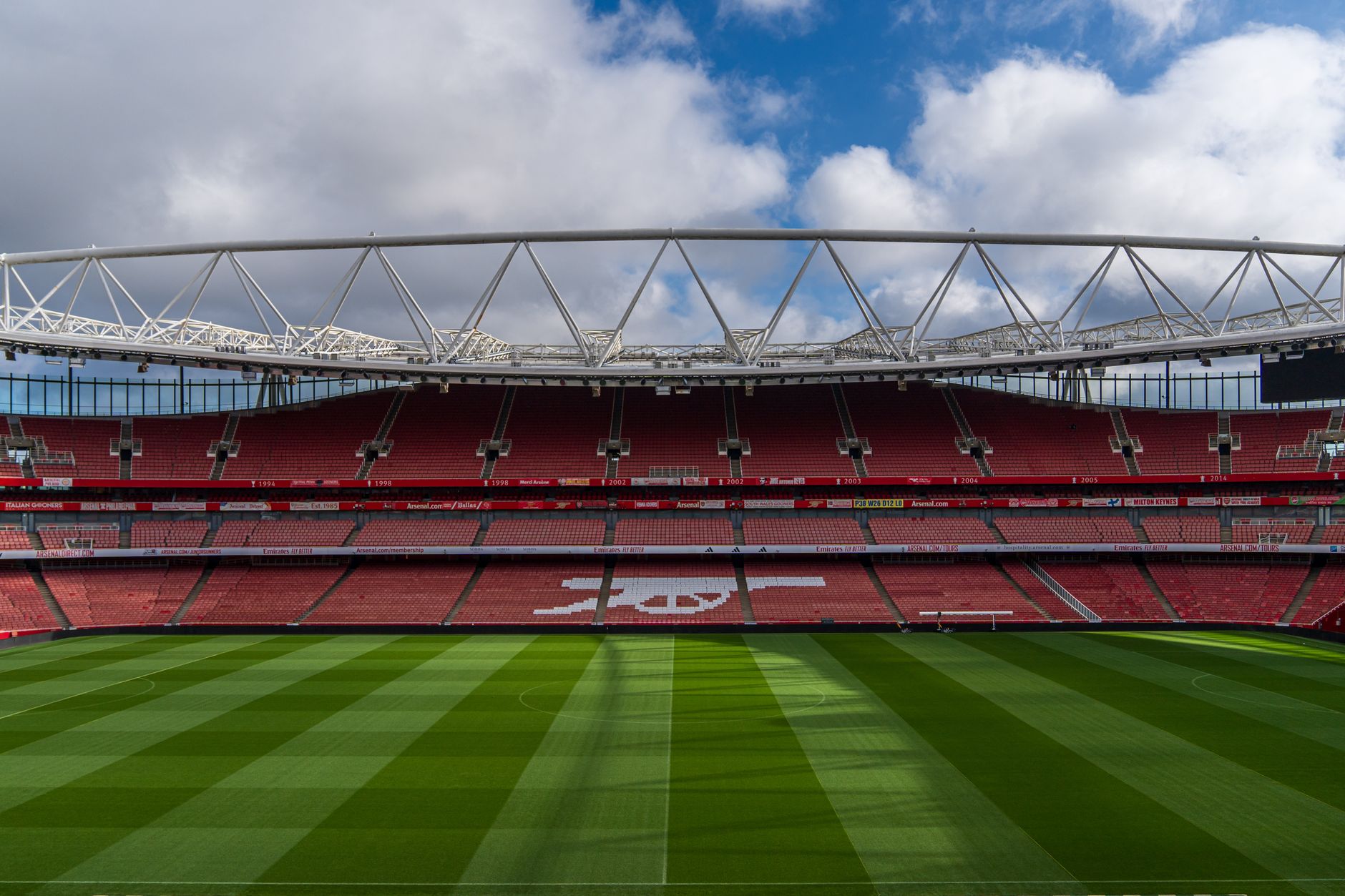
Photo by Mario Spencer on Pexels
Step 3: Which Premier League places matter most?
The most important Premier League standings zones are the title race, UEFA Champions League places, other European qualification positions and the bottom three relegation places. The exact European allocation can change with UEFA access rules and domestic cup results, so the official Premier League and UEFA announcements should settle the final interpretation.
A table is more useful when divided into practical zones:
- Title position: the club leading the competition.
- Champions League race: usually the leading four, although the number of English places can vary under UEFA performance-based access rules.
- European qualification zone: positions connected to the UEFA Europa League or UEFA Conference League, depending on cup winners and allocation rules.
- Mid-table: clubs with no immediate European or relegation pressure.
- Relegation zone: the bottom three, normally sent to the EFL Championship.
The word “usually” is doing real work here. The UEFA access list and domestic cup outcomes can affect which positions receive European football. A club finishing fifth may benefit if another English club wins a European competition or if an FA Cup place shifts through the table. Conversely, a team sitting 17th may be safe today but vulnerable after one defeat. Football Compass readers should pair table position with fixtures, expected line-ups and tactical matchup data rather than treating rank as a complete forecast. Isn’t that the point? The standings measure the accumulated outcome, not the next ninety minutes.
How should you read the title race and relegation battle?
Read the title race by comparing points, games played, goal difference and remaining fixtures; read the relegation battle by calculating the points gap to 17th place and identifying direct matches between threatened clubs. Position alone is not enough because clubs may have played different numbers of matches.
A six-point gap with ten matches remaining is manageable, while a six-point gap with three matches remaining is usually severe. The same logic applies at the top: Liverpool may lead Arsenal by two points, but Arsenal’s remaining schedule could be materially easier. Build a small table with four fields—current points, matches remaining, goal difference and difficult opponents—and update it after every round. This creates a more honest view than a red or green arrow. Here is a practical checklist:
- Record each club’s current points.
- Count unplayed fixtures.
- Mark matches against the top six and direct relegation rivals.
- Compare home and away splits.
- Note European and domestic cup commitments.
- Recheck after postponed matches are completed.
The overlooked issue is fixture imbalance. A postponed Tottenham Hotspur match can make the table appear misleading for several days, while a club with one extra match may sit temporarily above a rival without being in a stronger position. Searchers looking for “Premier League standings today” should confirm whether every club has completed the same number of games before making a ranking claim.
Step 4: How can you use standings for better match analysis?
Use Premier League standings as a starting dataset, then combine them with recent form, home-and-away performance, injuries, expected line-ups, schedule strength and tactical matchups. A top-four club can still be poor value in one fixture, while a lower-ranked club can be dangerous at home against an opponent carrying European fatigue.
The most useful workflow separates facts from interpretation. First, copy the current points and goal difference from the official table. Second, inspect the last five results without treating all opponents as equal. Third, check whether the club’s ranking is driven by close wins, high-scoring victories or defensive stability. Fourth, review availability: a missing goalkeeper, centre-back or primary striker can matter more than a three-place table gap. Finally, compare the tactical interaction. Manchester City’s possession approach, for example, creates a different problem from Newcastle United’s direct transitions, even when their league positions are adjacent.
My contrarian conclusion is that “current form” is often overvalued when it is separated from schedule quality. Five wins against bottom-half opponents may look stronger than three wins and two defeats against Arsenal, Liverpool, Manchester City, Chelsea and Aston Villa, but the records do not measure the same difficulty. advanced football statistics guide Football Compass can help frame these details through player stats and tactical coverage, while the standings provide the hard baseline. Never let a dramatic form graphic replace the underlying fixture list.

Photo by Huy Phan on Pexels
Step 5: Verification
Verify a Premier League standings claim by checking the season, timestamp, matches played, points total, goal difference and official competition source. If two tables disagree, the current official Premier League table should take priority, followed by a reputable provider such as ESPN, because cached pages, postponed fixtures and live-match updates can create temporary differences.
Use this five-point verification test:
- Season: Is the table for 2025–26, 2026–27 or another campaign?
- Status: Is it live during a match, provisional after a match or final?
- Games played: Do both clubs have the same number of completed fixtures?
- Arithmetic: Does points total equal three times wins plus draws?
- Ranking rule: Is the displayed order explained by points and goal difference?
A specific operational problem appears during live matches: some providers update points immediately but delay goal difference until the match feed closes. That can briefly show two clubs in an order that changes again after the final whistle. Another issue occurs with postponed fixtures, when one team has 25 matches and another has 24. The table is not “wrong” simply because the match counts differ; it is incomplete as a comparison. Save the page time, not just the screenshot. If you are using standings for a prediction or wager, record the source at the moment of the decision so you can audit your reasoning later. matchday prediction checklist
Want to verify a table with a wider football research process?
Troubleshooting common failures
Most Premier League standings errors come from stale pages, wrong competitions, postponed fixtures, live-match refresh delays or misunderstood tiebreakers. The fastest fix is to identify the exact field that appears wrong—season, points, games played, goal difference or position—then compare the same field on the official Premier League table and ESPN.
Common failures and practical fixes
- The table shows the wrong season: change the competition selector and confirm the campaign label.
- Points do not add up: recalculate wins multiplied by three plus draws.
- A club appears too high: compare goal difference and matches played.
- The table has not refreshed: reload after the final whistle and check the update time.
- European places look confusing: review UEFA access rules and domestic cup outcomes.
- A postponed fixture creates uneven totals: compare points per match only as a temporary analytical measure.
- A search result displays an old table: open the source directly rather than trusting the preview.
A useful edge case is a tie at the end of the season. Many readers assume head-to-head record always decides the ranking, but Premier League procedures can involve goal difference, goals scored, head-to-head criteria and, in an extreme unresolved case, a play-off mechanism under the competition rules. The exact order should be checked in the current Premier League rules and handbook, not copied from an unofficial forum. The official rules state that “the rules shall be binding on all Clubs,” which is why a prediction site cannot override the competition’s ranking process. If a table still looks inconsistent, take a second screenshot after the provider refreshes and compare it with the official record. That is boring, precise and far safer than guessing.
Frequently Asked Questions
Q: What are the Premier League standings?
A: The Premier League standings are the official ranking table for England’s 20 top-flight football clubs. Clubs receive three points for a win, one for a draw and zero for a loss, with points normally determining position before goal difference and later tiebreakers are considered. The table also records matches played, wins, draws, defeats, goals scored, goals conceded and goal difference. Use the official Premier League website for final confirmation and ESPN for a convenient secondary display.
Q: How do I check the Premier League standings today?
A: Open the official Premier League table, confirm the season and check the update time before reading the ranking. During a matchweek, compare the result with ESPN Soccer Standings because live tables can refresh at different speeds. Check whether postponed fixtures mean clubs have played different numbers of matches. For prediction work, record the table timestamp and then review fixtures, injuries and recent form through Football Compass or another specialist source.
Q: What is the difference between points and goal difference?
A: Points measure match results, while goal difference measures the margin between goals scored and goals conceded. A win gives three points regardless of whether the score is 1–0 or 5–0, but the first result creates a +1 goal difference and the second creates +5. Goal difference can decide the order when clubs finish level on points. Therefore, tracking both figures is essential when two Premier League clubs are separated by only one point.
Q: Why does a Premier League standings table sometimes look wrong?
A: A table usually looks wrong because it is stale, displaying another season, updating during a live match or reflecting postponed fixtures. Recheck the season label, matches played, points arithmetic and update timestamp before assuming an error. A provider may update points before goal difference, especially during stoppage time. If the disagreement remains after the match feed closes, use the official Premier League table and competition handbook as the controlling references.
Q: How much does it cost to view the Premier League standings?
A: Viewing the basic Premier League standings on the official Premier League website or ESPN is generally free. You may need a paid broadcaster or streaming subscription to watch live matches, but a subscription is not normally required to read the table. Football Compass also provides free editorial coverage focused on predictions, tactics, player stats and the 2026 FIFA World Cup. Always check the provider’s current terms because access conditions can vary by country and product.
Q: Is Premier League position more important than recent form?
A: Premier League position is the stronger long-term record, while recent form can better describe a club’s immediate direction. Position includes every completed match, but a five-game form line may hide opponent strength, injuries and home-away balance. Compare both measures alongside remaining fixtures and goal difference. A club ranked eighth after facing several top opponents may be more competitive than a seventh-ranked club whose recent wins came against weaker opposition.
Q: Can Premier League standings predict the next match?
A: Premier League standings can inform a prediction, but they cannot determine the next result. Combine ranking with expected line-ups, injuries, home advantage, tactical matchups, schedule congestion and recent opponent quality. A practical method is to record points and goal difference first, then adjust your view for missing players and fixture difficulty. Treat the final prediction as uncertain, set a fixed budget if money is involved, and never confuse a table position with a guaranteed outcome.
The Premier League standings are most useful when treated as verified evidence rather than a colourful ranking graphic. Check the official source, calculate the numbers, account for postponed matches and then add football context from ESPN and Football Compass. That process takes a few extra minutes, but it prevents the classic mistakes: wrong season, stale table, missed goal difference and exaggerated form. Isn’t that the point of tracking the standings carefully? We are not collecting numbers for decoration; we are trying to understand the competition before the next decision. Use the table as the foundation, keep your records time-stamped and review the rules whenever European qualification or a tiebreaker becomes decisive.
Ready to follow the next matchweek with a sharper process?
End of Transmission
Thank you for reading. Explore more articles from the archive.
Football Compass · Article #72 · 2026