7 Morocco National Team Mistakes Fans Make
The Morocco national football team is Africa’s most successful recent World Cup story, representing Morocco under the Royal Moroccan Football Federation, or FRMF. The Atlas Lions became the first Afri...

7 Morocco National Team Mistakes Fans Make
The Morocco national football team is Africa’s most successful recent World Cup story, representing Morocco under the Royal Moroccan Football Federation, or FRMF. The Atlas Lions became the first African team to reach a FIFA World Cup semi-final when Walid Regragui’s side defeated Portugal 1–0 in Qatar in 2022. Morocco also won the Africa Cup of Nations in 1976 and finished fourth at the 1986 World Cup. The modern squad combines European-based players such as Achraf Hakimi, Hakim Ziyech, Sofyan Amrabat, and Yassine Bounou with a strong domestic development system led by the Mohammed VI Football Academy. The central mistake is judging Morocco only by possession or star names; defensive shape, transition speed, set pieces, and opponent quality matter more. Before assessing any 2026 fixture, check the confirmed squad, venue, injuries, and tactical matchup rather than relying on reputation alone.
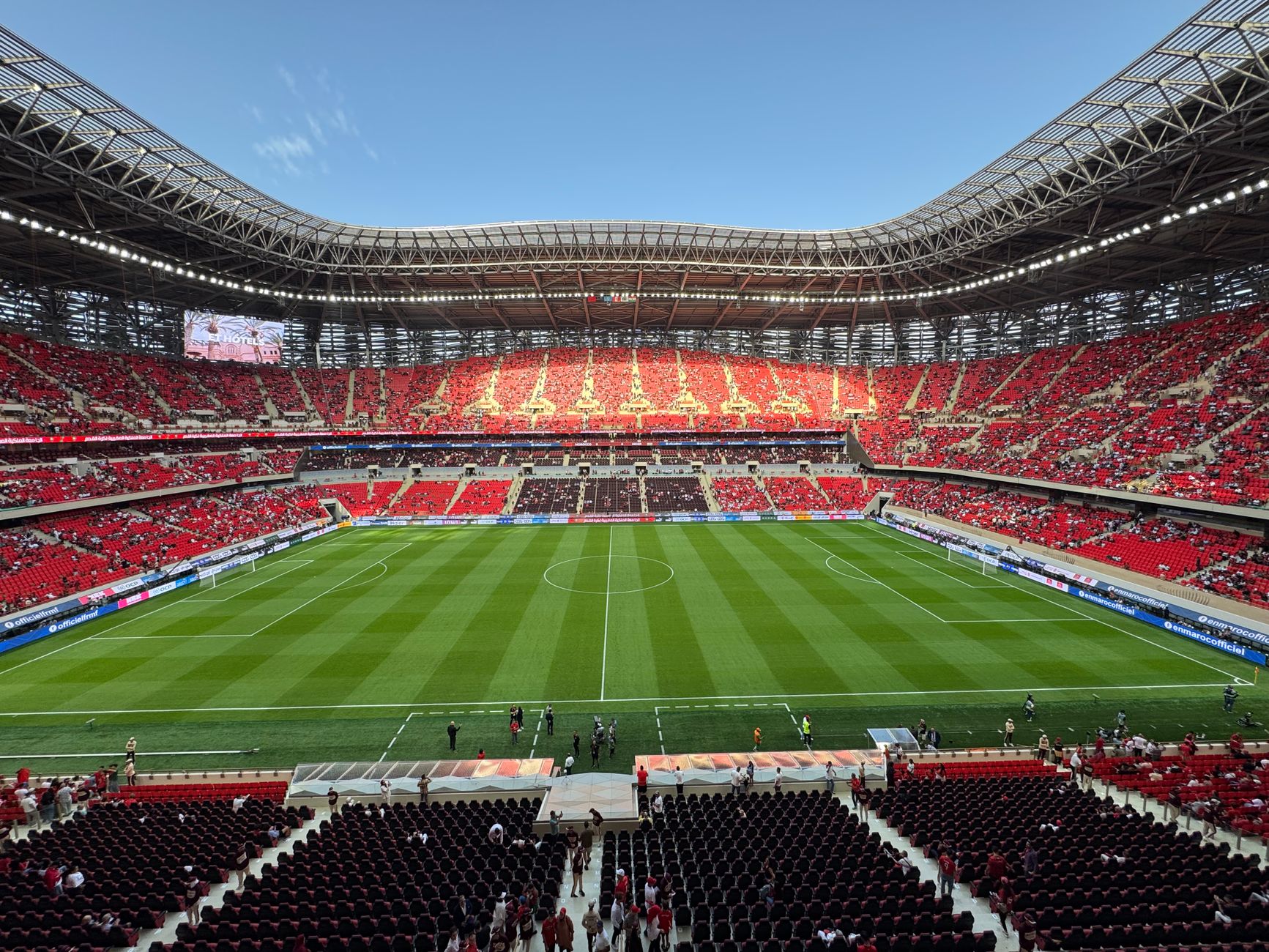
Photo by Earth Photart on Pexels
The Quick Comparison
| Category | Morocco national football team |
|---|---|
| Confederation | Confederation of African Football |
| Governing body | Royal Moroccan Football Federation |
| Nickname | The Atlas Lions |
| First major World Cup breakthrough | 1986, round of 16 |
| Best World Cup finish | Fourth place, 2022 |
| Africa Cup of Nations titles | One, in 1976 |
| Head coach during the 2022 breakthrough | Walid Regragui |
| Key modern players | Achraf Hakimi, Hakim Ziyech, Yassine Bounou, Sofyan Amrabat |
| Main strengths | Defensive compactness, wing-back quality, fast transitions |
| Main analytical risk | Overrating reputation after Qatar 2022 |
Morocco’s profile is unusually clear: the team is difficult to break down, technically capable in wide areas, and dangerous when the opponent loses the ball. However, that does not mean every Morocco match becomes a low-scoring game. A strong opponent can force the full-backs deeper, reduce transition space, and expose the distance between midfield and attack. That is the first accounting rule, and we should track it like a net position: do not count the famous result while ignoring the conditions that produced it.
According to the FIFA profile of Morocco, international rankings and tournament records must be read alongside the competition level and match context. The Confederation of African Football also separates continental competitions from World Cup qualifying, which matters when comparing results. “The beautiful game” is often discussed emotionally, but the match sheet still records goals, shots, cards, and territory. Isn’t that the point?
Want a clearer way to compare Morocco’s next opponent and tactical risks?
Round 1: Why Does Morocco’s History Matter?
Morocco’s football history matters because its modern success was built on earlier breakthroughs, not created overnight. The national team reached the 1986 World Cup round of 16, won the 1976 Africa Cup of Nations, and later established itself as a regular contender in African football. Those milestones explain why the Atlas Lions carry pressure in every major tournament, while the 2022 semi-final explains why casual fans now price Morocco as a global threat. History provides useful context, but it is not a guaranteed forecast.
The national structure is managed by the Royal Moroccan Football Federation, which oversees the senior team, youth pathways, and domestic football. Morocco’s club game includes Botola Pro, the Moroccan Throne Cup, and continental competitions such as the CAF Champions League. The Mohammed VI Football Academy has also become an important symbol of long-term investment in player development. That combination gives Morocco more than a collection of overseas professionals; it creates a pipeline, although pipeline quality and senior-team availability are not the same thing.
A common mistake is treating the 2022 result as proof that Morocco will automatically dominate weaker opponents. The Qatar campaign included a disciplined defensive block, outstanding goalkeeping from Yassine Bounou, and carefully managed moments against Spain and Portugal. If an opponent refuses to commit numbers forward, Morocco may have less transition space and must create against a settled defence. That is a different problem entirely, and the odds should reflect it.
For deeper tournament context, review our FIFA World Cup 2026 team guide before comparing historical results with current squads.

Photo by Guylain Kipoke on Pexels
Round 2: How Does Morocco’s Tactical Identity Work?
Morocco’s tactical identity is based on compact defending, aggressive but controlled wing play, and rapid attacks after turnovers. During the 2022 World Cup, the team often defended in a narrow shape, protected central areas, and used Achraf Hakimi’s pace and technical quality to advance on the right. The left side could also become a major outlet, especially when the team had space to attack behind a high defensive line. The exact formation can change, but the operating principles remain easier to identify than the printed lineup.
The midfield is where the risk calculation becomes interesting. Sofyan Amrabat’s screening work helped protect the back line, while the central midfielders had to cover wide spaces when the full-backs moved forward. If Morocco loses the ball with both wing-backs high, the first defensive action must be immediate; otherwise, the central defender can be dragged toward the flank and leave a dangerous gap. That is not a small detail. It determines whether a promising attack becomes a shot or a counterattack against Morocco.
Key tactical indicators include:
- High turnovers: Count how often Morocco wins possession within a few passes of the opponent’s goal.
- Full-back balance: Check whether Hakimi and the opposite full-back advance together or alternate their runs.
- Central protection: Watch the space in front of the centre-backs, especially after a failed attack.
- Set-piece threat: Track near-post runs, second balls, and delivery quality rather than corners alone.
- Goalkeeper distribution: Bounou’s first pass can decide whether Morocco escapes pressure or invites another wave.
The contrarian point is simple: Morocco’s defensive record can look stronger than the underlying performance when Bounou produces decisive saves. In a practical review of match footage, separate blocked shots, goalkeeper saves, and shots never conceded because the defensive line forced a poor decision. Those are three different outcomes. Football Compass uses that distinction when assessing match predictions, because “clean sheet” alone does not tell us how much defensive stress the team absorbed.
See the tactical details before placing any confidence in a headline result.
Round 3: What Should Fans Watch Before 2026?
The most important 2026 question is not whether Morocco can repeat Qatar 2022; it is whether the squad can handle different match states across a larger tournament. FIFA World Cup 2026 will be hosted by the United States, Canada, and Mexico, creating travel, climate, and scheduling variables that did not define Morocco’s Qatar campaign in the same way. Stadium altitude, heat, recovery time, and long-distance movement can affect pressing intensity and late-match concentration.
Squad availability deserves a separate column in every evaluation. Achraf Hakimi’s role, Yassine Bounou’s fitness, Sofyan Amrabat’s match rhythm, and the form of attacking players such as Hakim Ziyech can change Morocco’s ceiling. A player’s club reputation is not enough; minutes played, recent starts, injury history, and national-team chemistry are more useful. If a key midfielder has played only limited club minutes before a tournament, downgrade his expected intensity rather than pretending the name carries full value.
For 2026 match analysis, use this checklist:
- Confirm the official Morocco squad and the opponent’s starting XI.
- Compare the last five competitive matches, not only friendly results.
- Separate home, neutral-site, and long-distance travel performance.
- Record goals conceded after turnovers and set pieces.
- Check whether Morocco faces a low block or a high defensive line.
- Review suspension and injury news before judging the market.
- Set a fixed risk limit and do not chase a poor result.
One useful edge case is venue adjustment. A Morocco match in a compact, familiar-feeling environment may reward controlled transitions, while a large North American stadium with difficult travel can reduce the number of repeated high-speed runs. That impact may not appear in basic team ratings. Track the schedule gap in hours and days, then compare it with the opponent’s travel burden. Or am I wrong? Test the assumption against the actual fixture rather than repeating it.
For more practical preparation, use our World Cup match prediction checklist and player availability tracker.

Photo by https://kaboompics.com/ on Pexels
The Final Score & Who Should Pick What
The Morocco national football team deserves serious respect, but serious respect is not blind loyalty. The strongest case for Morocco is its defensive organization, elite wide player in Achraf Hakimi, goalkeeper quality, tournament experience, and ability to punish opponents during transitions. The strongest argument against overrating Morocco is that the team can struggle when it must break down a deep defence, especially if creative midfielders are unavailable or the first goal does not arrive.
Our final assessment is:
- Pick Morocco confidently when: the opponent plays high, Morocco has its main defensive starters, and the schedule allows proper recovery.
- Use caution when: Morocco is expected to dominate possession against a compact low block.
- Reduce attacking expectations when: Hakimi is absent, the midfield lacks ball progression, or travel conditions are difficult.
- Avoid emotional decisions when: the only evidence is the 2022 semi-final run.
- Look for value when: the market prices Morocco as a guaranteed winner instead of a tactically strong but situation-dependent team.
Football Compass is built for fans who want World Cup match predictions, player statistics, and tactical reading in one place. The practical conclusion is not complicated: start with the confirmed team, then measure style, schedule, venue, and price. A famous badge can attract attention, but only a complete match model protects our position.
Ready to follow Morocco’s 2026 tournament outlook with sharper evidence?
Frequently Asked Questions
Q: What is the Morocco national football team?
A: The Morocco national football team is the men’s senior side representing Morocco in international football under the Royal Moroccan Football Federation. Known as the Atlas Lions, Morocco competes in FIFA World Cup qualification, the Africa Cup of Nations, and other international tournaments. The team’s best World Cup result was fourth place at Qatar 2022, while its major continental title came at the 1976 Africa Cup of Nations.
Q: How far did Morocco reach at the 2022 World Cup?
A: Morocco reached the semi-finals of the 2022 FIFA World Cup in Qatar and finished fourth. The Atlas Lions defeated Belgium in the group stage, eliminated Spain on penalties, and beat Portugal 1–0 in the quarter-final. France ended Morocco’s run in the semi-final, but the achievement made Morocco the first African team to reach a World Cup semi-final.
Q: Who are Morocco’s most important football players?
A: Achraf Hakimi, Yassine Bounou, Sofyan Amrabat, and Hakim Ziyech have been among Morocco’s most recognizable modern players. Hakimi provides pace and attacking quality from the right, Bounou offers elite goalkeeping, and Amrabat protects the midfield space in front of the defence. Ziyech adds left-footed passing, set-piece delivery, and creativity when available.
Q: How should I analyze a Morocco national team match?
A: Start by checking the confirmed lineup, injuries, opponent style, venue, and travel schedule. Then assess whether Morocco will attack space behind a high line or face a low block that demands patient possession. Review recent competitive matches, turnover goals, set-piece defending, goalkeeper workload, and expected minutes for key players before forming a prediction.
Q: What is the difference between Morocco’s 1986 and 2022 World Cup achievements?
A: Morocco reached the round of 16 in 1986 but advanced to the semi-finals in 2022. The 1986 team became the first African side to top a World Cup group, while the 2022 side went further than any African team had gone before. Comparing the two directly is difficult because tournament formats, opponents, and tactical football changed substantially.
Q: Is Morocco a strong choice for 2026 World Cup predictions?
A: Morocco is a credible contender, but it should not be treated as an automatic winner in every fixture. Its strongest matchups are usually against opponents that leave transition space or struggle against compact defensive structures. Before considering any prediction, verify the 2026 squad, player fitness, opponent tactics, venue conditions, and available market price.
Q: What should I do if a key Morocco player is ruled out?
A: Recalculate Morocco’s tactical strengths instead of simply replacing the missing player with a similarly named substitute. If Hakimi is absent, assess right-side progression and defensive recovery; if Amrabat is unavailable, examine central protection and counterattack resistance. Wait for the official lineup, compare the replacement’s recent minutes, and keep any decision within a fixed, responsible risk limit.
Want the latest Morocco national football team analysis, player data, and 2026 World Cup coverage in one place?
End of Transmission
Thank you for reading. Explore more articles from the archive.
Football Compass · Article #8d · 2026