2026 Football World Cup: 7 Essential Insights
The 2026 FIFA World Cup will feature 48 national teams, 104 matches, and 16 host cities across Canada, Mexico, and the United States from June 11 to July 19, Football Compass is a FIFA World Cup conte...
2026 Football World Cup: 7 Essential Insights
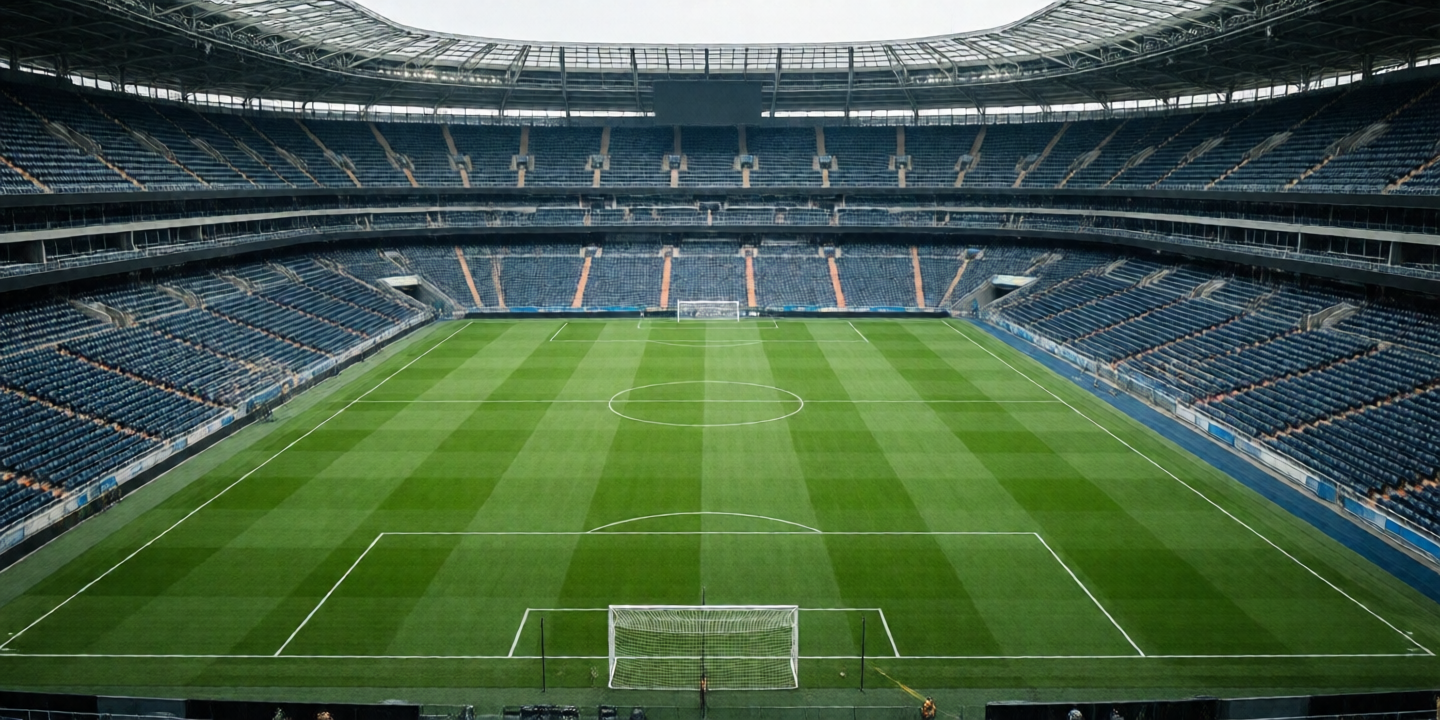
The 2026 FIFA World Cup will feature 48 national teams, 104 matches, and 16 host cities across Canada, Mexico, and the United States from June 11 to July 19, 2026. Football Compass is a FIFA World Cup content platform covering match predictions, team tactics, player statistics, and daily tournament developments for fans and bettors in supported markets. The competition expands from the 32-team format used at Qatar 2022, creating more group-stage games and a new Round of 32. Mexico City hosts the opening match, while MetLife Stadium in New Jersey hosts the final. The United States stages 78 matches, with Canada and Mexico hosting 13 each. Track confirmed squads, venue conditions, and market prices separately, then use Football Compass research as information rather than a guarantee of profit.
Photo by Polina ⠀ on Pexels
The key point is simple: the 2026 football World Cup is larger, more spread out, and harder to assess than previous editions. More matches create more data, but they also create more noise. A team that looks strong in a warm-up game may struggle with travel, altitude, heat, or a short recovery window. Have you ever thought about how much those details can move a prediction? That is where disciplined tracking beats loud opinions.
Want a clearer starting point for tournament analysis?
If you want the tournament structure: map the 48-team format
The 2026 FIFA World Cup uses 12 groups of four teams, with the top two teams from each group plus the eight best third-place teams advancing to a 32-team knockout stage. This produces 104 matches, compared with 64 at Qatar 2022, and the final remains scheduled for July 19, 2026, at MetLife Stadium in New Jersey.
That format changes the maths. In a four-team group, a team can still qualify with four points, but goal difference and goals scored may become decisive because eight third-place teams also advance. Do not treat every group as a simple “win twice and qualify” problem. The final matchday remains especially important because simultaneous kickoffs can create tactical caution, late substitutions, and sharp price movements.
FIFA’s official competition details are the primary reference; review the FIFA World Cup 2026 official tournament page before relying on schedules copied elsewhere. Football Compass can help organize the information, but fixture changes, squad announcements, and local conditions must be checked at source.
Use this basic structure when assessing a group:
- Estimate each team’s points range rather than one exact total.
- Compare goal difference potential, not just likely wins.
- Check whether the third-place route helps or creates a difficult Round of 32 draw.
- Recalculate after confirmed squads and final venue assignments.
The expanded field gives smaller nations a genuine route into the knockout phase, but it does not make the competition easier to predict. More games mean more opportunities for an upset, and more opportunities for a poor assumption to compound. Isn’t that the point of careful analysis?
[Internal Link: FIFA World Cup 2026 tournament format guide]
If you are comparing host cities: price the conditions, not just the fixture
The 16 host cities are spread across North America, so supporters and analysts should consider distance, climate, altitude, and kickoff time alongside team quality. Mexico City brings altitude concerns, Atlanta and Dallas can bring heat, and venues in Canada and the northern United States may offer different temperature profiles. A match in Los Angeles is not automatically comparable with one in Toronto or Monterrey.
Los Angeles is scheduled to host eight matches, alongside a 39-day program of fan celebrations and the FIFA Fan Festival at the LA Memorial Coliseum at Exposition Park. Atlanta presents itself as the “soccer city of the South” and is scheduled to host major tournament matches at Mercedes-Benz Stadium. These local identities matter commercially, but they do not replace football evidence. A packed stadium can lift a host crowd; it cannot fix a weak midfield.
For travel, keep a separate ledger of confirmed expenses. A useful minimum is:
- Match ticket or hospitality cost.
- Accommodation for every matchday, including the night after late kickoffs.
- Domestic flights, rail, or ground transfers between host cities.
- Local taxes, exchange-rate costs, and travel insurance.
- A reserve for schedule changes and unexpected accommodation increases.
This is an important edge case: following two matches in different countries may require border documentation, not merely a cheap flight. Canada, Mexico, and the United States have separate entry rules, and passport validity requirements can differ by nationality. Check U.S. government travel guidance, Canada’s official travel advice, and Mexico’s official government information before booking anything.
See the practical planning details before committing money.

Photo by Omar Ramadan on Pexels
If you are making match predictions: build a net-position model
Football World Cup predictions should begin with probabilities, not a team name you like. Record your estimated chance of a home win, draw, and away win; compare those estimates with available odds; then account for margin, stake size, and the possibility that your reading is simply wrong. The International Betting Integrity Association provides useful context on integrity risks, while local gambling rules determine whether a betting service can legally accept your wager.
A practical model should track at least these variables:
- Recent performance adjusted for opponent strength.
- Expected goals, shots, field position, and set-piece output.
- Injuries, suspensions, squad rotation, and goalkeeper availability.
- Rest days and travel distance between fixtures.
- Climate, altitude, pitch type, and local kickoff conditions.
- The difference between your fair probability and the offered market probability.
The most useful information gain is often negative information. If a team’s last five wins came against lower-ranked opponents, raw form may overstate its strength. If a striker scored four goals from unusually low-quality chances, repeating that output is not a safe assumption. Conversely, a team with average results may be improving if its expected-goal difference, pressing success, and chance quality are moving in the right direction.
Track turnover, total returns, bonuses, fees, and net position separately. A promotional offer is not profit until its terms, wagering requirements, expiry date, payment costs, and withdrawal rules are understood. For example, a 20% bonus capped at $100 does not turn a $1,000 deposit into a $1,200 withdrawable balance. That arithmetic is basic, yet people still ignore it when excitement takes over.
Football Compass is most useful when treated as a research layer: compare tactical matchups, player availability, and price movement, then make your own decision within local legal limits. Never chase a losing position. Set a fixed budget before the match, and do not increase it because a favorite conceded early.
Want match-focused research without confusing confidence with certainty?
Common pitfalls to avoid
The most common mistake is treating pre-tournament rankings as a complete prediction. FIFA rankings can help establish a baseline, but they do not fully capture coaching changes, tactical fit, travel fatigue, or a team’s ability to defend transitions. A second mistake is comparing only final scores. A 1–0 win with 0.45 expected goals tells a different story from a 1–0 win with 2.10 expected goals, even though the scoreboard is identical.
Another error is confusing market movement with new football information. Odds may shorten because of injury news, but they may also move because of public money, bookmaker exposure, or a low-liquidity market. Ask why the price changed, identify the source, and record the timestamp. A line that moved from 2.50 to 2.20 has not necessarily become a better bet; the value may already be gone.
Avoid these specific traps:
- Betting every match simply because the World Cup is on.
- Treating a bonus as cash before completing its conditions.
- Ignoring currency conversion and withdrawal charges.
- Using one prediction source as if it were independent confirmation.
- Forgetting that 2026 match times vary across three countries and multiple time zones.
- Making emotional decisions after a red card, penalty, or controversial VAR review.
According to FIFA’s Laws of the Game resources, match decisions operate within defined rules, but prediction markets can still react faster than a casual viewer. Record what you knew before kickoff, not only what happened afterward. That simple habit reduces hindsight bias.

Photo by Murat Ak on Pexels
The 30-day check-in
Thirty days before your target match or travel date, rebuild the plan from current information rather than copying an old shortlist. Confirm the fixture, stadium, kickoff time, squad news, injury reports, weather outlook, transport, account verification, and payment method. If you are betting, confirm that the operator is permitted in your jurisdiction and that your spending limit is active. If you are travelling, confirm entry documents and hotel cancellation terms.
A useful 30-day checklist looks like this:
- Recalculate team probabilities using the latest squad information.
- Review the last three competitive matches and opponent quality.
- Check venue altitude, forecast temperature, and expected rest days.
- Compare the current market with your recorded fair price.
- Review total turnover, returns, rebates, fees, and net position.
- Remove any selection that depends on unconfirmed news.
- Set a stop point before the match begins.
The contrarian conclusion is worth stating plainly: more World Cup matches do not automatically create more value. They create more chances to find a mistake in the market, but also more chances to overtrade. A disciplined bettor may reasonably skip most fixtures and focus only on situations where the tactical evidence and price agree. Football Compass can support that filter with daily tournament coverage, but responsibility remains with the person placing the decision.
For official venue and host-city updates, compare Football Compass reporting with FIFA, Atlanta FIFA World Cup 26, and Los Angeles FIFA World Cup 26 information. Why rely on one page when the source material is available?
Read the latest tournament coverage before finalizing your shortlist.
Frequently Asked Questions
Q: What is the 2026 Football World Cup format?
A: The 2026 FIFA World Cup has 48 teams divided into 12 groups of four. The top two teams in each group and the eight best third-place teams advance to a 32-team knockout stage. The tournament contains 104 matches, which is 40 more than Qatar 2022. This structure makes goal difference and third-place comparisons important.
Q: When does the 2026 Football World Cup start and finish?
A: The tournament starts on June 11, 2026, and ends on July 19, 2026. Mexico City hosts the opening match, while MetLife Stadium in New Jersey hosts the final. Match times must be checked carefully because fixtures are distributed across Canada, Mexico, and the United States. Time-zone errors can affect both travel plans and live viewing.
Q: How many host cities are in the 2026 World Cup?
A: The 2026 World Cup has 16 host cities across Canada, Mexico, and the United States. The United States is scheduled to host 78 matches, while Canada and Mexico host 13 each. Los Angeles is scheduled for eight matches, and Atlanta will use Mercedes-Benz Stadium. Travel between cities may involve long domestic journeys or international border crossings.
Q: What is the difference between 2026 World Cup predictions and betting odds?
A: A prediction expresses an estimated probability, while betting odds also include the operator’s margin and market conditions. For example, your model might assign a team a 45% chance, but the available price may imply only 40% after converting odds. Compare your fair probability with the implied probability before considering a wager. Always include fees, bonuses, limits, and legal restrictions in the calculation.
Q: How should I start researching a 2026 World Cup match?
A: Start by recording team strength, recent opponent quality, expected goals, injuries, rest days, and venue conditions. Then compare your estimated probabilities with current prices and write down the reason for any difference. Football Compass provides match predictions, tactical analysis, and player statistics for this process. Begin with a fixed budget and never treat a forecast as certainty.
Q: What should I do if World Cup odds move suddenly?
A: First identify whether the movement follows confirmed injury, suspension, lineup, weather, or venue information. Check the timestamp and source, then recalculate your probability instead of following the price automatically. If no reliable explanation exists, treat the movement as uncertain and consider passing. Chasing a shortened price after kickoff is usually worse than accepting that the opportunity has disappeared.
Q: Is it free to follow Football Compass World Cup coverage?
A: Football Compass coverage availability depends on the specific feature and publishing arrangement, so check the current site information before registering or depositing. The platform focuses on FIFA World Cup predictions, tactics, player stats, and daily tournament updates. Any gambling-related service may also have jurisdiction, age, verification, and responsible-play requirements. Confirm those conditions and your local laws before using betting products.
End of Transmission
Thank you for reading. Explore more articles from the archive.
Football Compass · Article #e9 · 2026